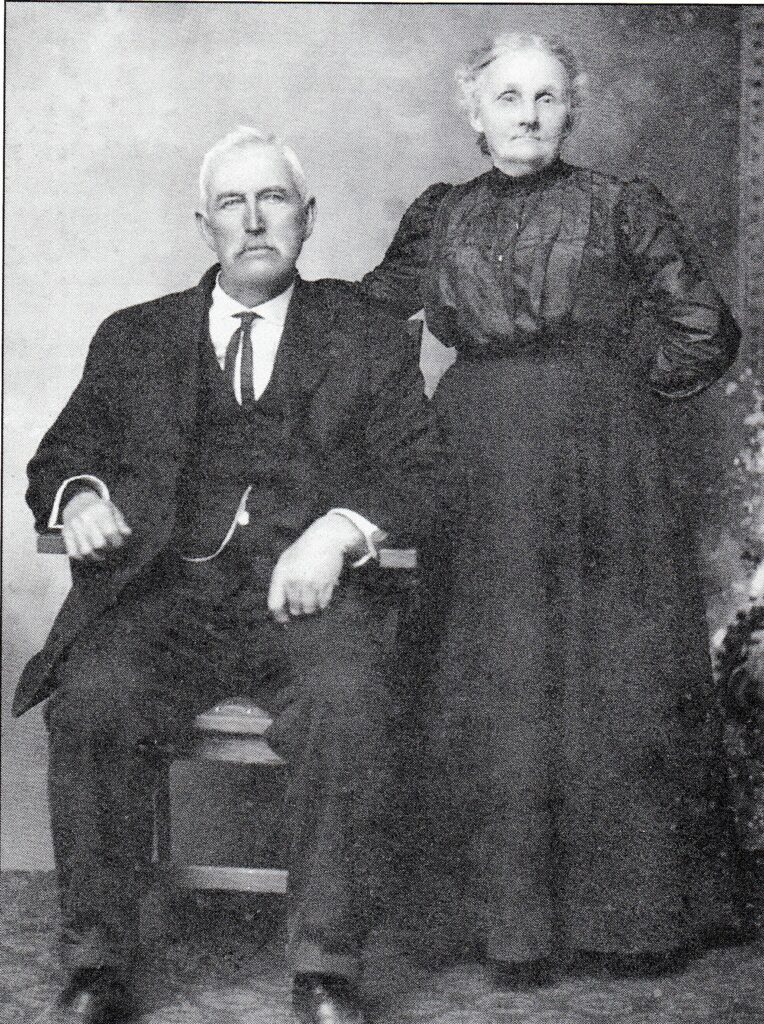
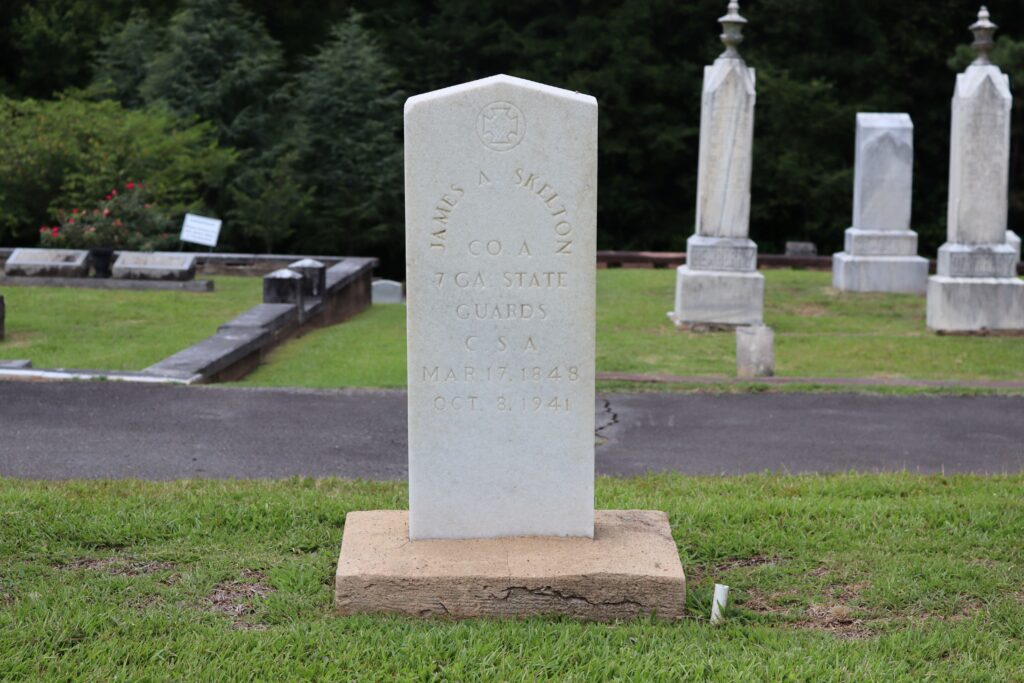
James A. Skelton was born on March 19, 1848, here in Kennesaw. The town was known as Big Shanty at the time. Skelton was born in a dirt-floored railroad shanty his grandfather built along the tracks of the Western and Atlantic Railroad. This is believed to have been one of the shanties that led to the name of the town being called Big Shanty.
Skelton’s father died when he was young, so he had to grow up fast. During April of 1862, while he was still just fourteen years old, the family needed money and he decided to take the train north to Cartersville in search of work. On the morning of the 12th he got on the train pulled by the locomotive General. He noticed strangers standing around the train. Right after he sat down, he felt the car in front of him being unlatched. He looked out the window and saw the locomotive and boxcars pull away. Three men came running out of the building and chased after the train. Skelton had just become a witness to the start of the Great Locomotive Chase!
During the war, Skelton joined the Confederate army. In 1864, he was assigned as a prison guard at the infamous Andersonville prison. The death rate among the guards was almost as high as the prisoners. Skelton was later assigned the duty of rounding up Confederate deserters.
After the war, Skelton returned home to find nothing left of Big Shanty. He spent some time with a crew digging up Union soldiers to be buried at the National Cemetery in Marietta. In July of 1865 he helped repair the Western and Atlantic Railroad and he remained a track foreman at Big Shanty until Republican Rufus Bullock became governor and he kicked every Democrat off the line. Skelton went to work for a couple of different railroads around the southeast but he did return to Big Shanty in 1869 long enough to marry Mary Victoria Chalker. He returned for good in 1890 when he came back to work for the Western and Atlantic.
Skelton retired from railroad work in 1903. He later went to live at the Old Soldiers Home in Atlanta. In 1939, he went to see his very first movie, Gone with the Wind. He was one of four Confederate veterans who attended the premiere as guests of Clark Gable. Before he died on October 8, 1941, he was the last surviving witness to the Great Locomotive Chase and the last surviving Civil War soldier from Cobb County.